You're booked.
Two things lock it in before we meet.
Get it on your calendar
The call happens on Zoom. Your join link is in your confirmation email.
- •Confirm the invite so your spot is locked in
- •Click "I know the sender" so future emails don't go to spam
- •Check your spam folder if you don't see it
Complete your Expertise Inventory
This is the first exercise of the Incubator, and you do it before we ever speak. Most people have never written down what they're actually an expert in. The ones who do show up to the call already seeing their skillset differently.
Eight questions, about ten minutes. Your advisor reads your answers before the call, so instead of an hour of background questions, you start at the part that matters: what your expertise is worth.
Start the Expertise InventoryFrom inside the Incubator
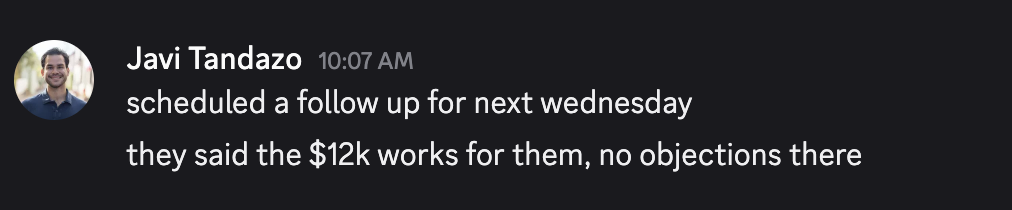
It starts with conversations
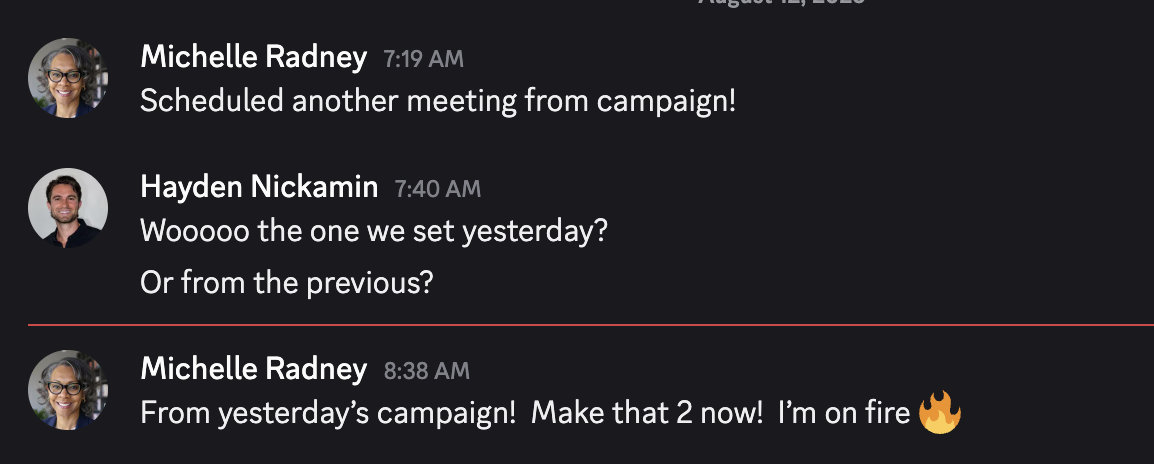
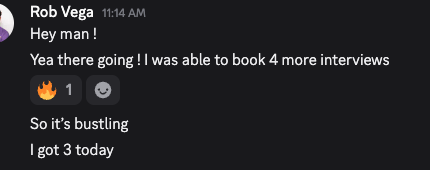
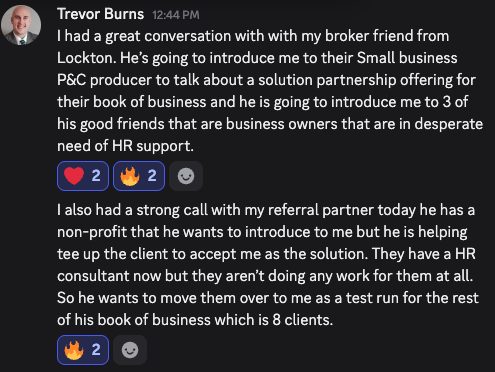
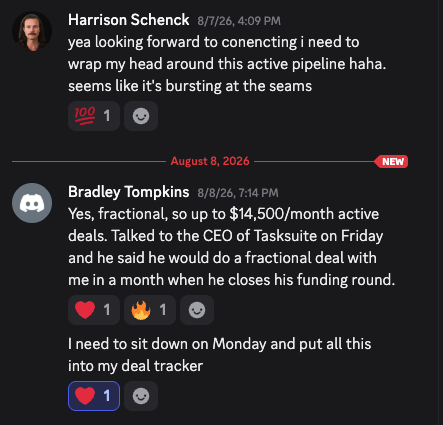
Weeks in, the calendar starts filling.
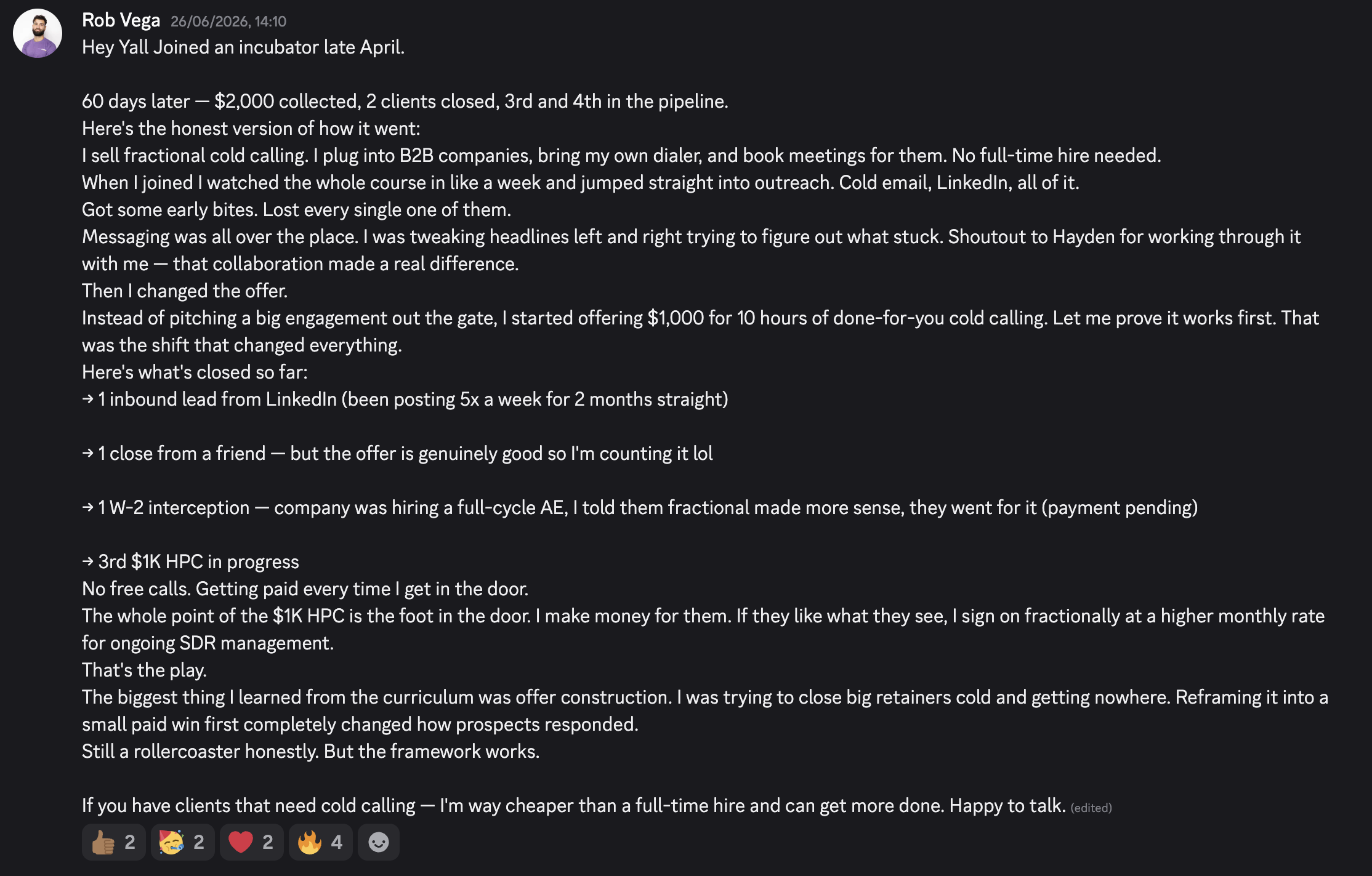



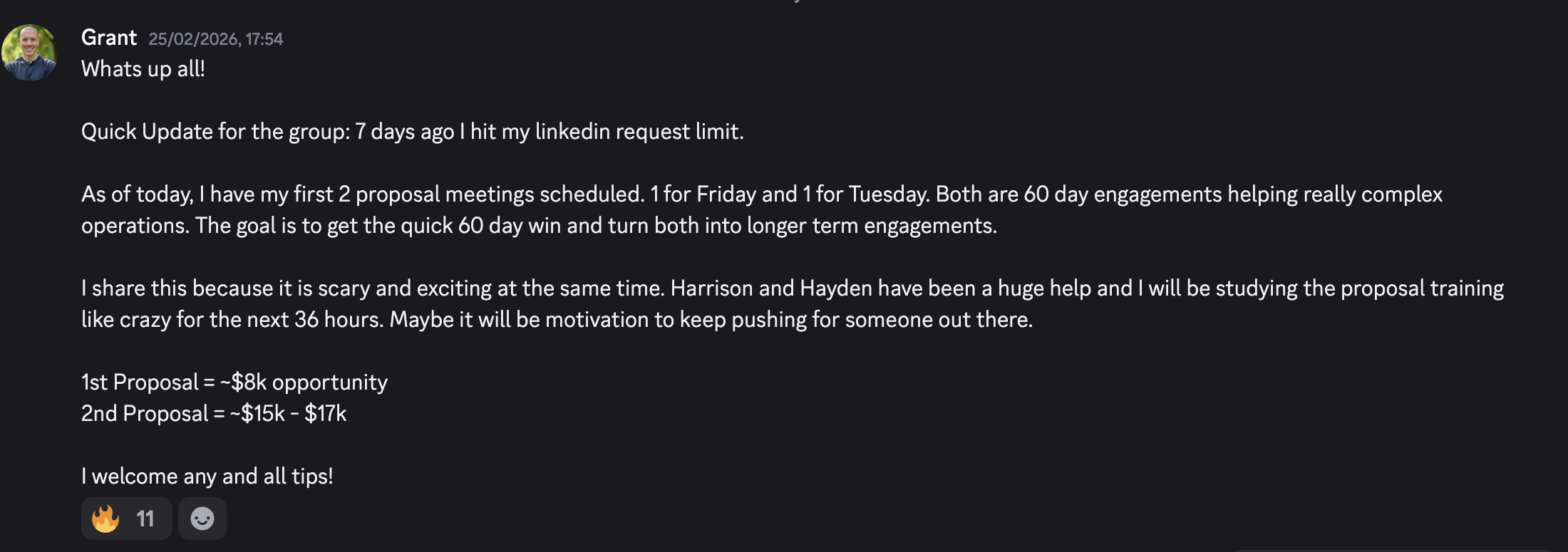
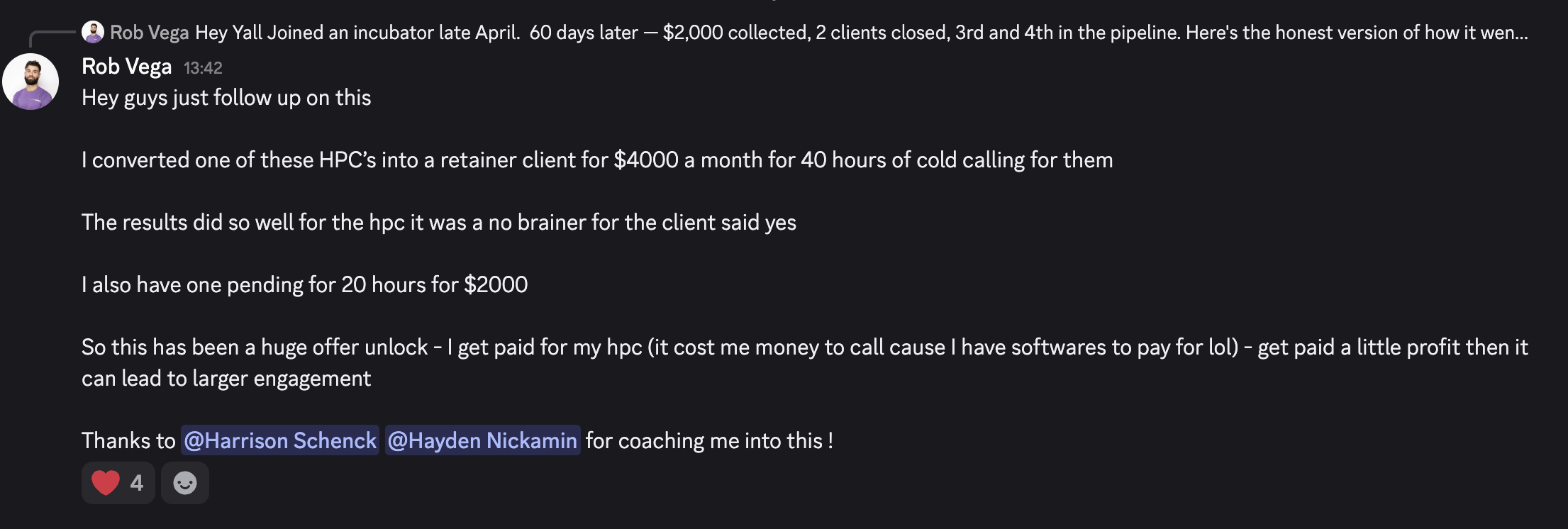
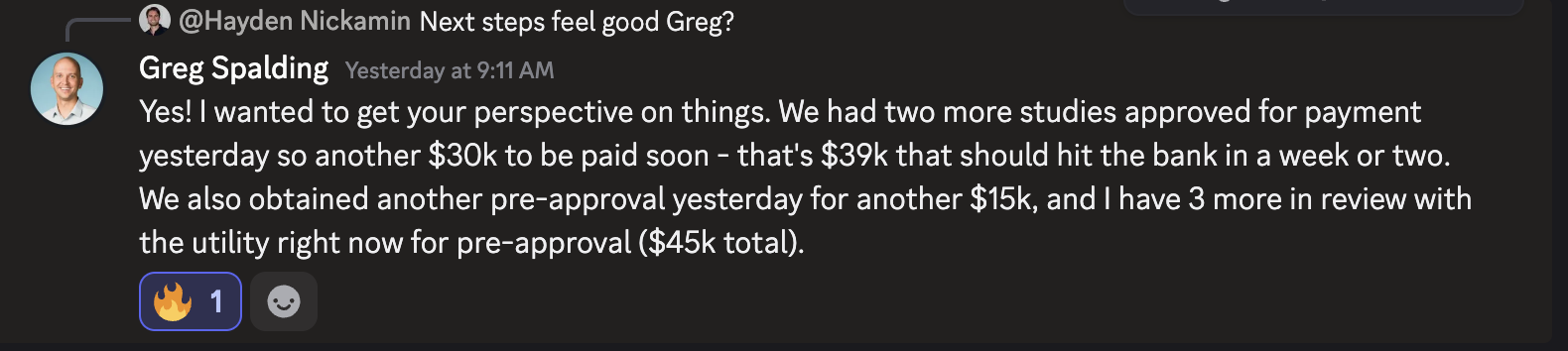
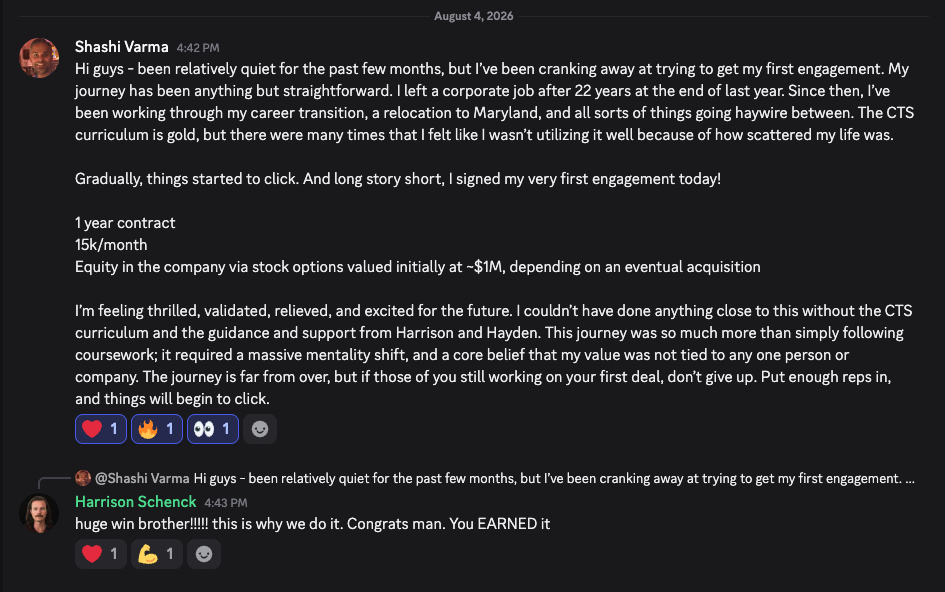
Then the first yes
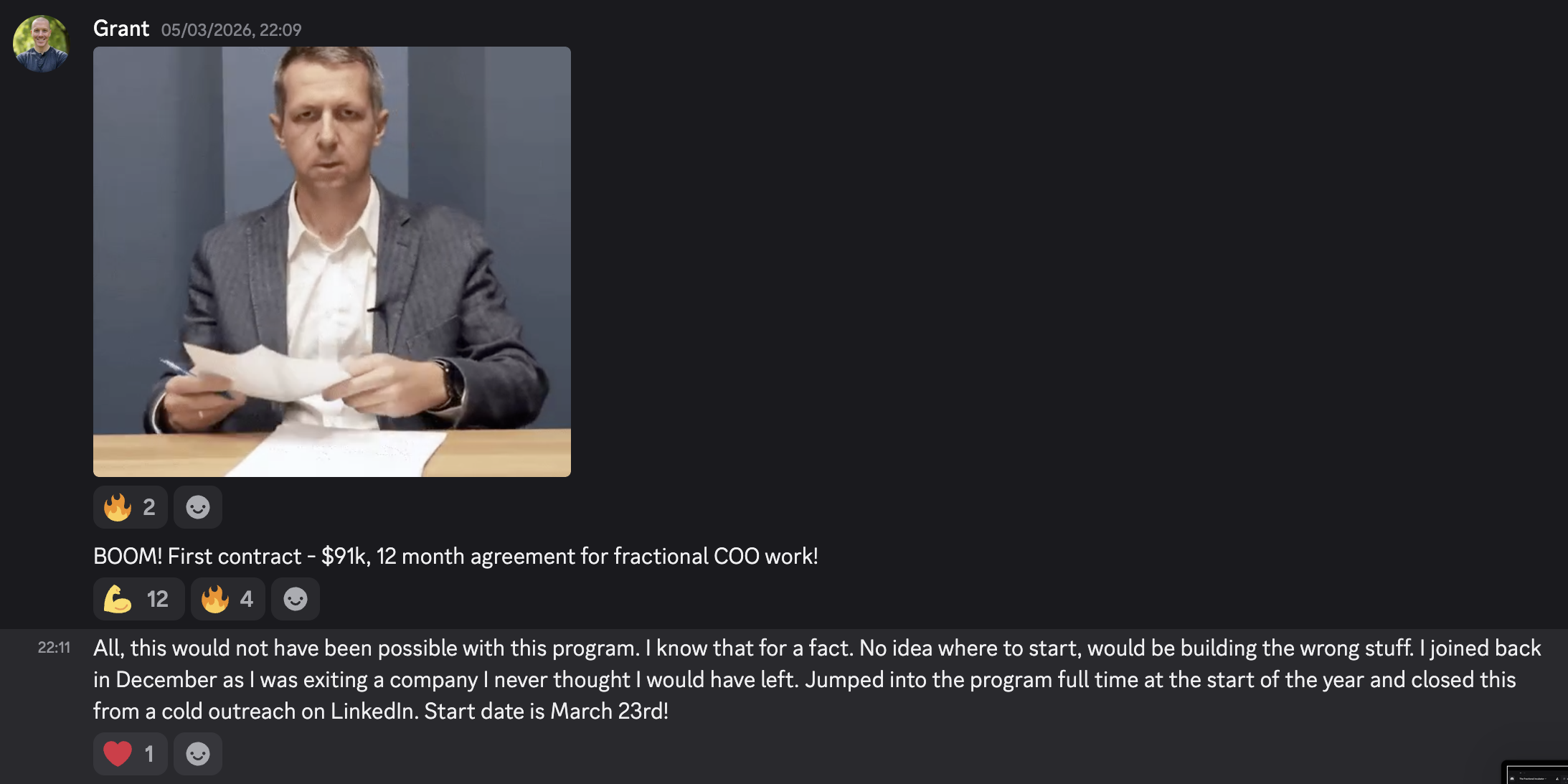
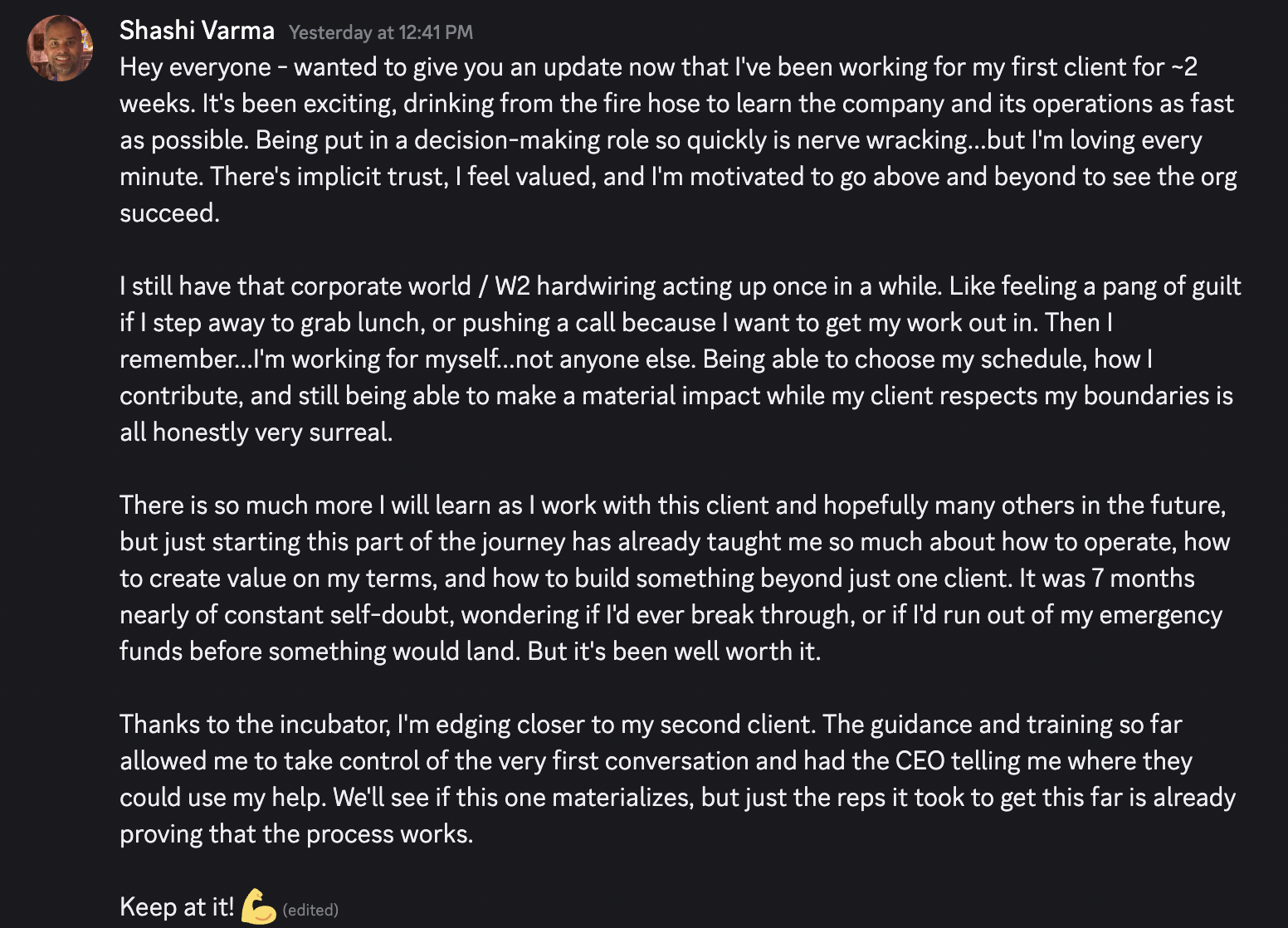
The first signed contract changes what feels possible.



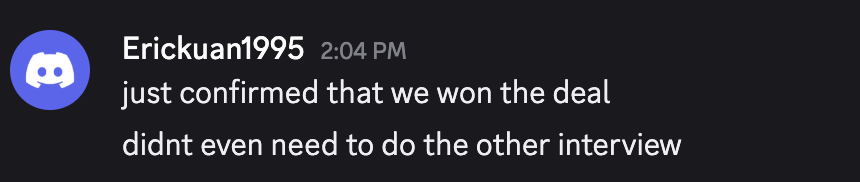



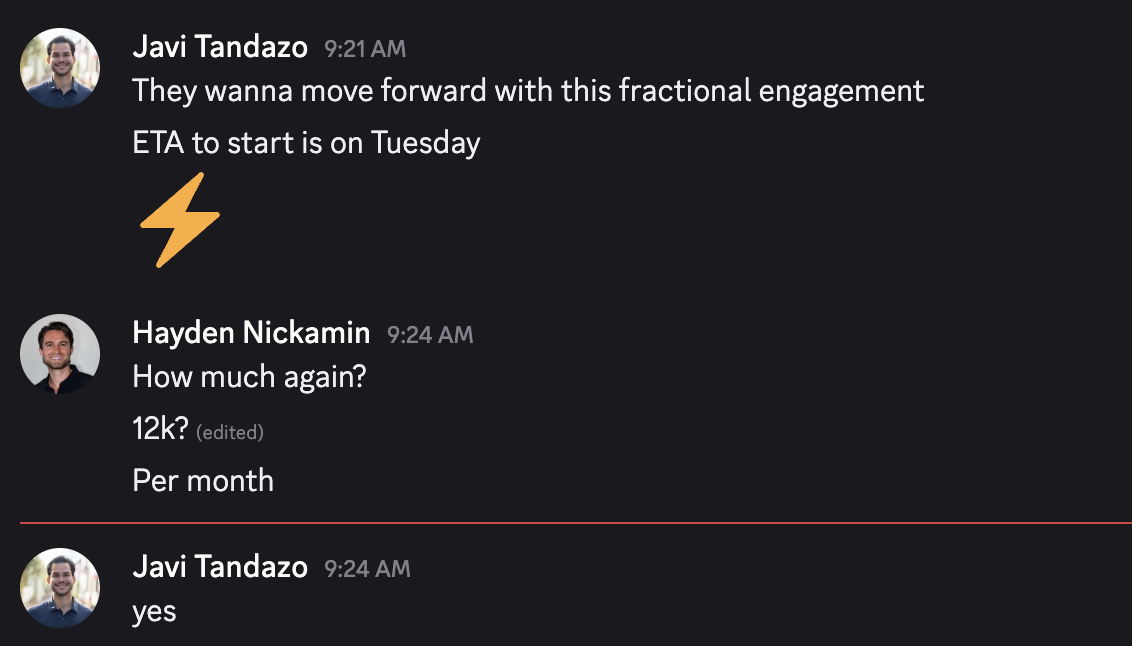
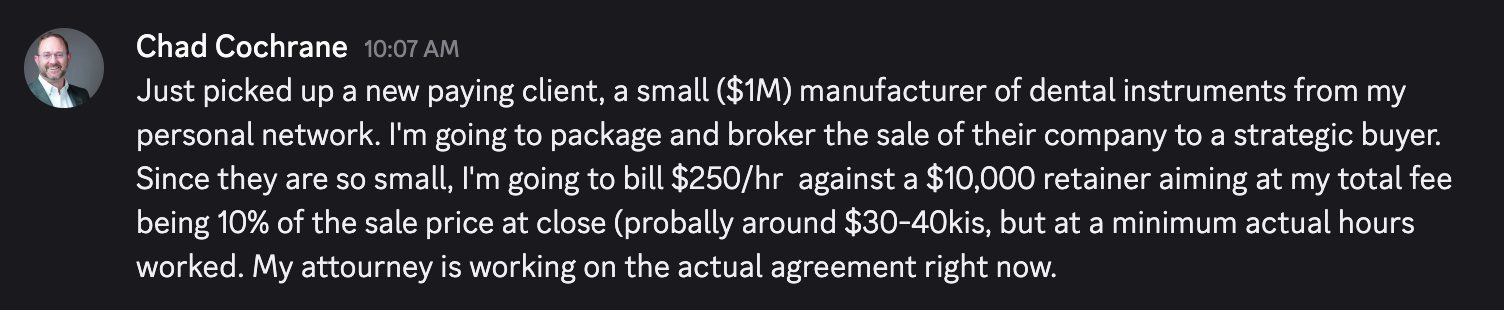
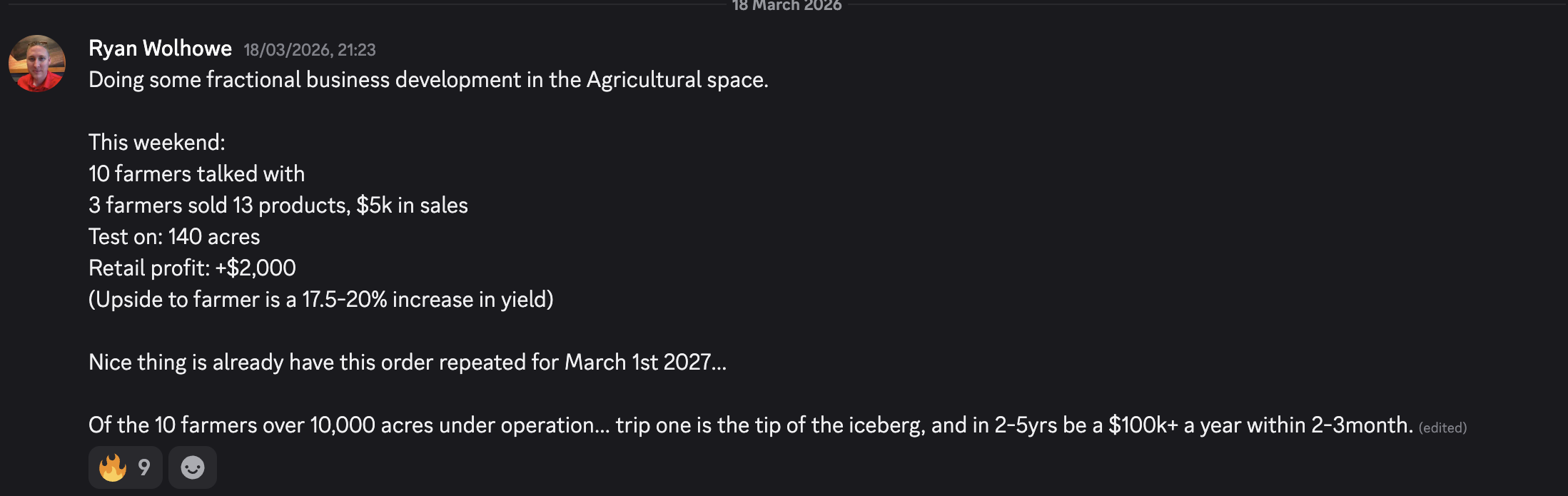
Then it compounds
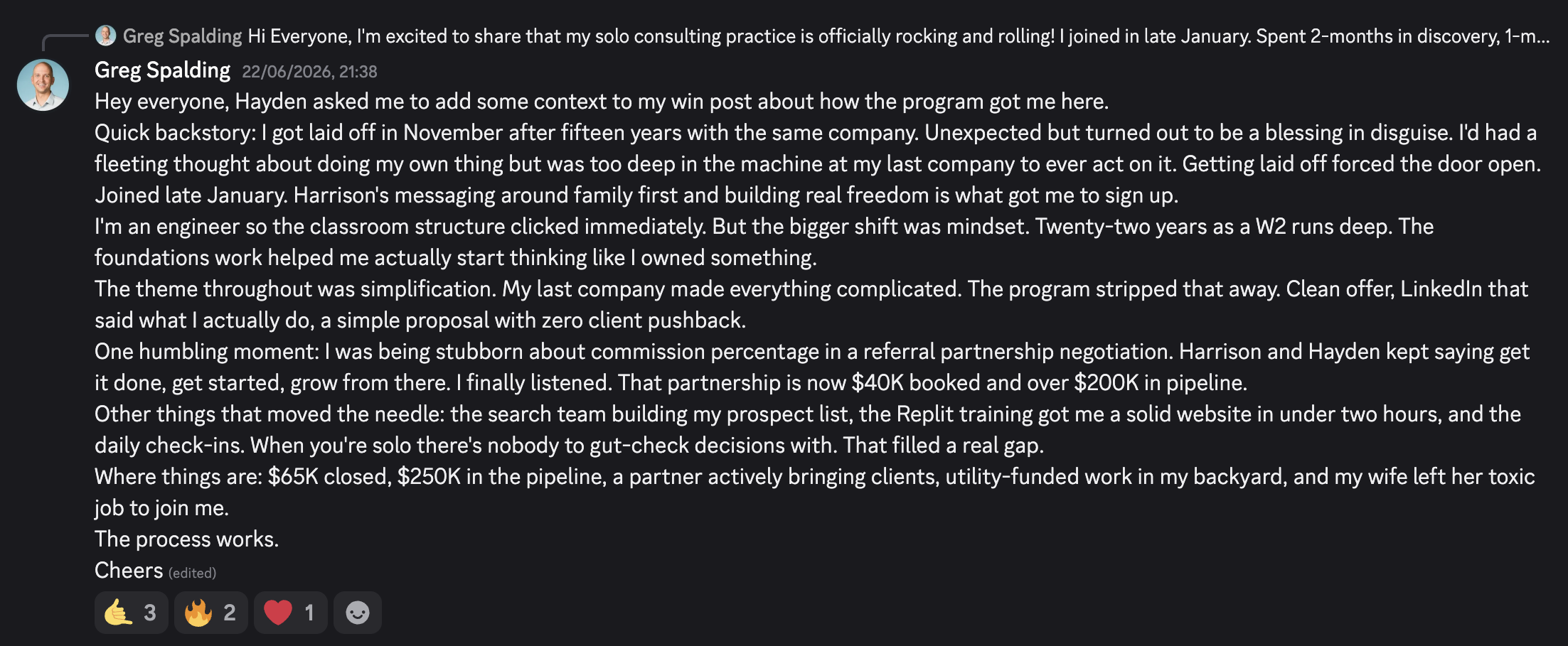
Pilots become retainers. Retainers become twelve-month engagements.
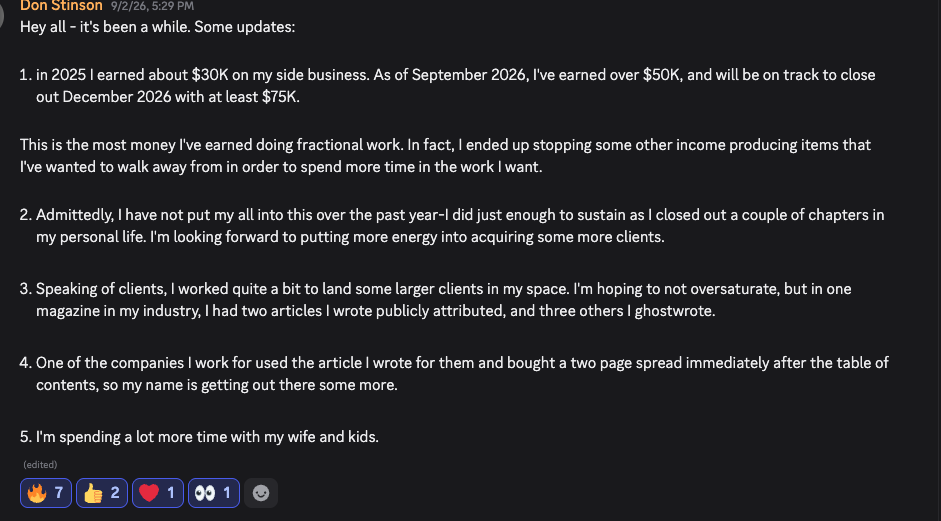




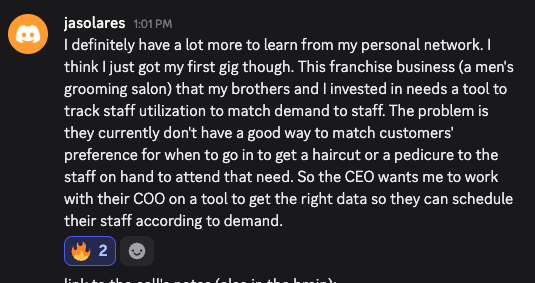
Until it's a real business
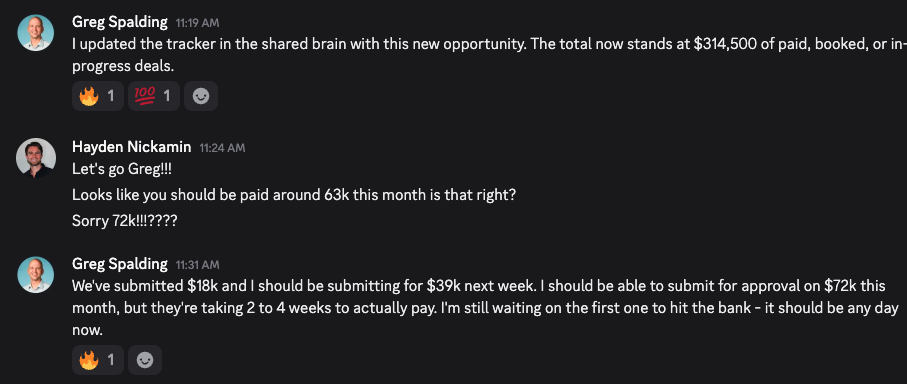
Team hires, repeat orders, partners, pipeline.


See how it actually works
The one thing we ask.
We hold this time for you and prepare for every call, so in return all we ask is a word if anything changes. If the call passes without one, we'll wish you every success, but you won't be able to book with us again, under any circumstances.
Different lives. Same decision.
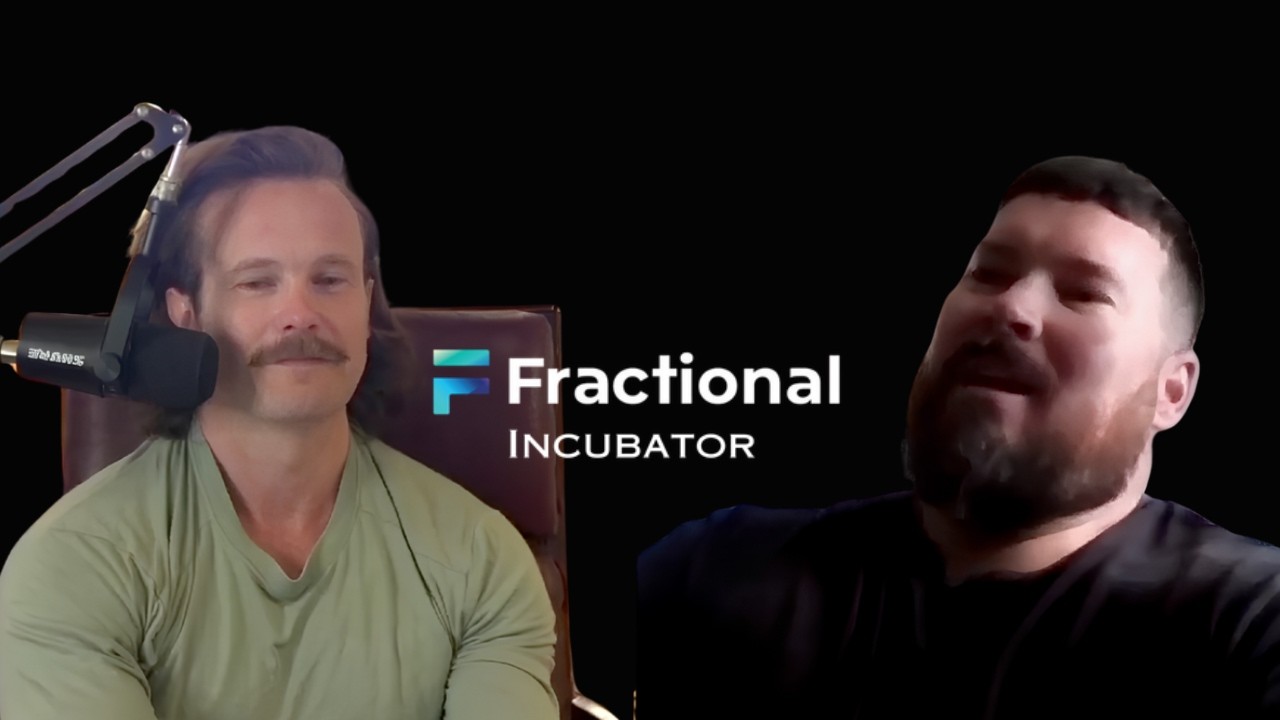
$175k in 60 days
Adam Gray
"I just dropped my kids off at school. I've never been able to do that."

$20k/month recurring
Sean McDonald
"Rejection is protection."

$100k+ in 60 days
Jon Hovage
"I sleep like a baby now."

$91k in 84 days
Grant
"I replaced my income on my first engagement. And I got 60% more time."

$40k in 64 days
Jessica
"My son once asked me, 'Mom, shouldn't you be working?' I don't want that anymore."

$12k in 60 days
Don
"I had to stop making it so hard for myself."
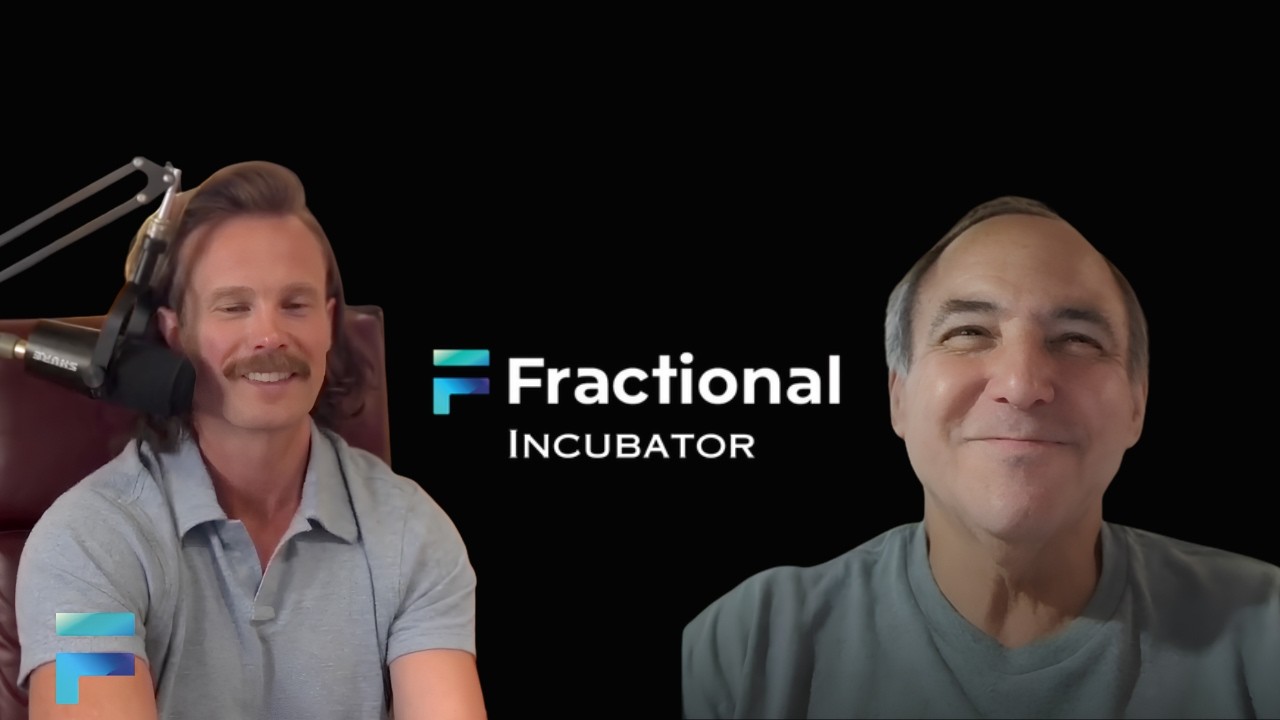
$260k over 12 months
Tony
"I probably did 200 blind calls. This is a better way to present yourself."

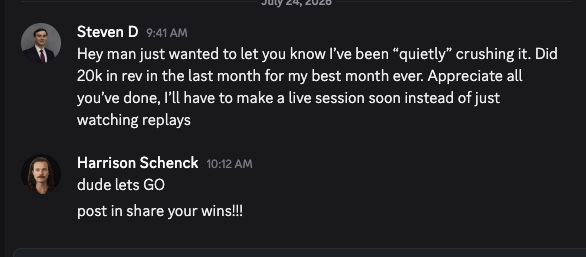
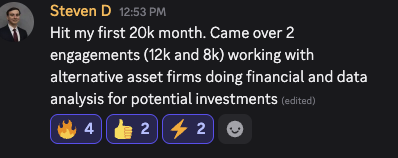
$20k month on the side of a W2
Steven
"Doesn't matter your age, doesn't matter the years of experience."

Replaced his executive salary in year one
Kevin
"I had spent 30 years closing deals for other people and you taught me how to close one for myself."

$50k a month, then a client made him CEO
Zack
"I never publicly launched. My network introduced me to a person or two, they introduced me to another person or two, and I started winning clients immediately."
Different niches. Some full-time, some on the side. But they all did the same thing:
They took the risk.
They bet on themselves.
They put in the work.
They made it real.
Two months ago, they were where you are right now.
Why The Incubator exists.
Back in 2020 I was in a senior role at a sports marketing startup. We'd grown from $400k when I joined, to projecting between $8-10M heading into the calendar year. Then the pandemic hit. Revenue crashed. I had to lay off the entire team I'd hand picked. These were hardworking people who'd done their job well. But you can't avoid layoffs by working harder.
That's when it clicked. Jobs aren't safe. You're betting 100% of your income on a single employer. Nobody does that with their net worth.
I kept at it anyway. Long hours. Constant travel. Then one night in a dingy hotel room in Myrtle Beach SC, I watched my son take his first steps through FaceTime.
I should have been there. I couldn't be. My company decided where I was, not me.
So I started working on a way out. Tried a bunch of new business models on the side. All failed. I was building from scratch on top of a full-time job.
Then the breakthrough: stop trying to invent something new. Monetize the skillset I already had. Marketing and sales for high-ticket services. I built it on top of the job, in the same hours I had, just used differently. Doubled my income inside a year, saved $100K, left full-time to run my own thing.
Now I help other executives do the same. Start fractional businesses on top of the careers they already built. Same skillset. New game.

Harrison SchenckFounder, The Fractional Incubator
Twelve months from now, you're operating differently.
The tactical stuff in the Incubator works. How to attract, convert and retain long-term clients. We've taught it to hundreds of people and it works the same every time.
But the people who actually build something don't do it because the tactics changed. They build it because they changed.
Most of the people we work with have spent 10, 15, 20 years inside a corporate structure. Salary on autopilot. Permission to act granted from above. Identity tied to job title.
Going fractional isn't just a different way to earn. It's a different way to operate. You stop selling hours, you start solving expensive problems. You stop asking, you start deciding. You stop relying on the company's infrastructure, you start building your own.
That shift is what makes the tactics stick. There's no journaling, no morning routines, no mantras. It's a sequence of structured changes in how you describe your value, how you price it, how you handle pushback, how you keep going when a quiet outreach week tests you.
By month twelve you don't just have a different income. You have a different professional identity. The version of you who got on this call wouldn't recognise the version closing the year.
Wherever you are, we've helped someone exactly like you.
Some come to us with nothing. No plan, no offer, no clients. Just a hunch that the skills they've built shouldn't keep enriching someone else. Others have done the building but can't get the selling to click. The product's good, the website's up, the conversations don't convert.
Some are still sitting in the corporate job. Salary's good, calendar's terrible, autonomy's gone. Others are already doing the thing. Solopreneurs who've capped out, coaches running real businesses but stuck under their own ceiling. Different stages, same pattern: the skill is there, the structure isn't.
The wins don't stop.
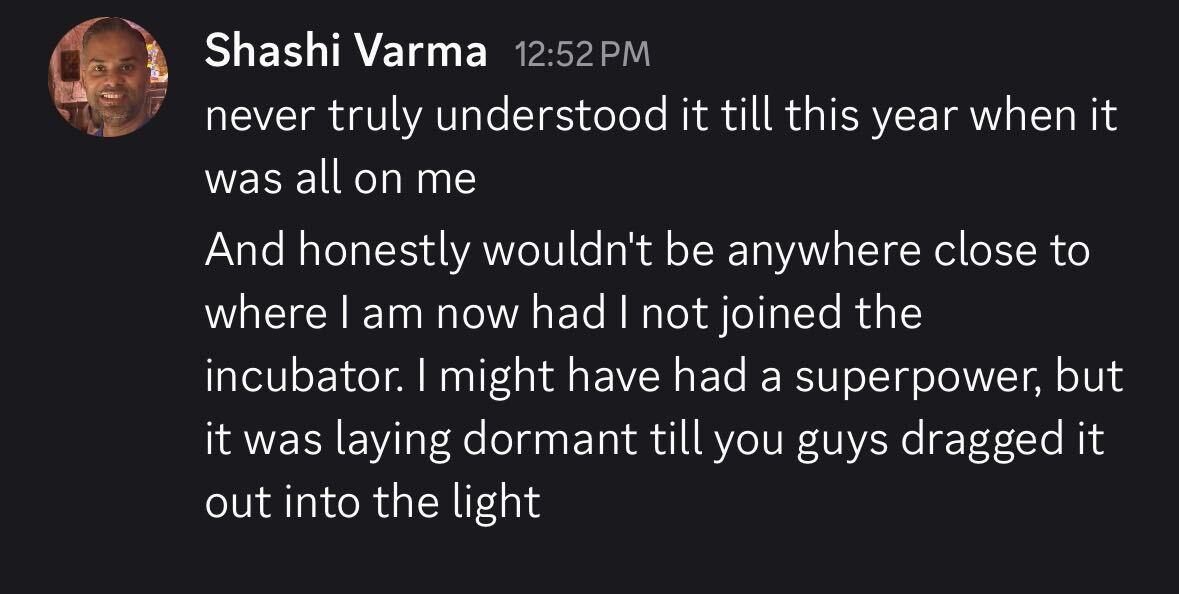
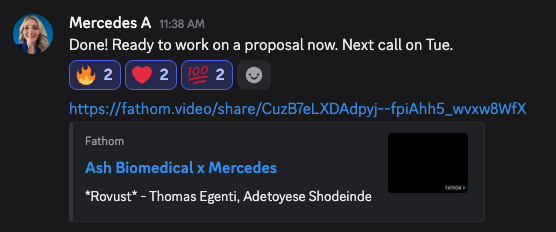
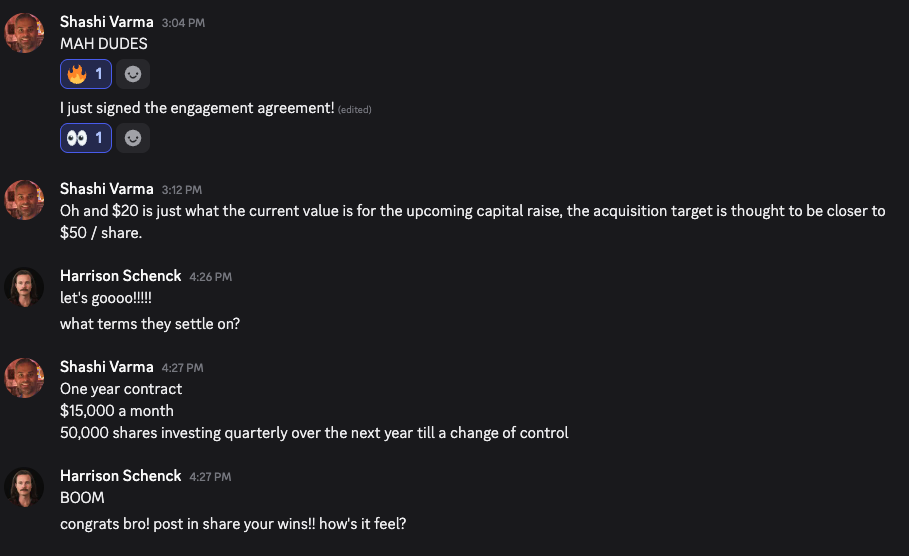
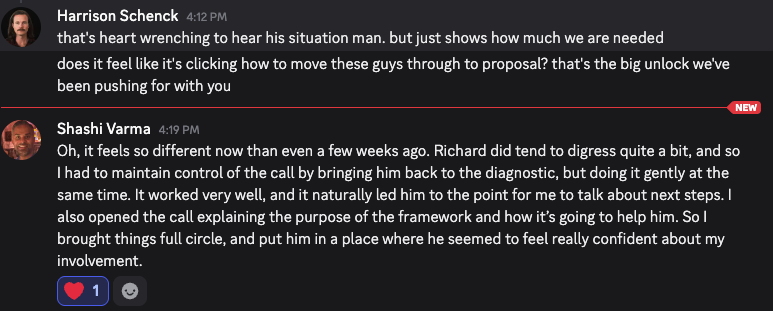
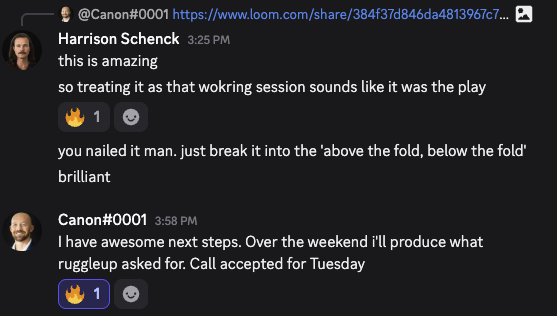
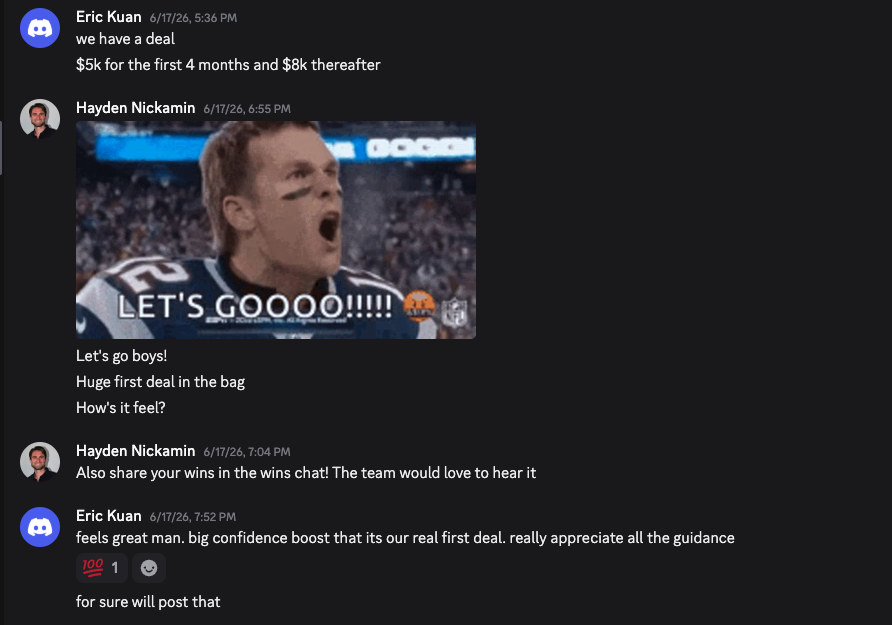
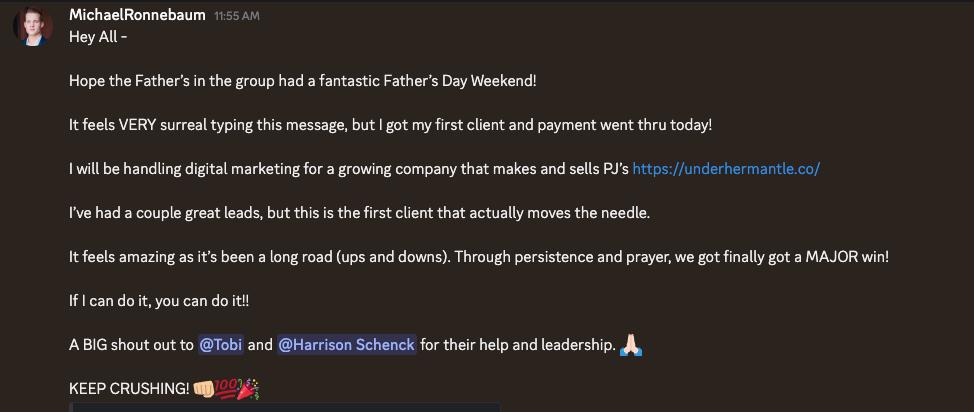
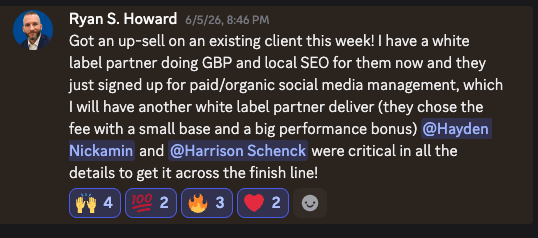
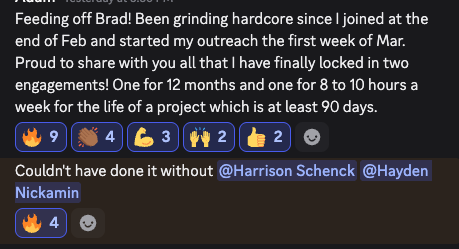
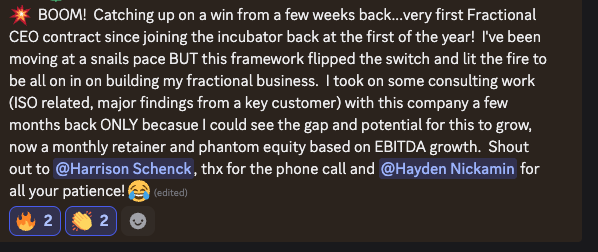
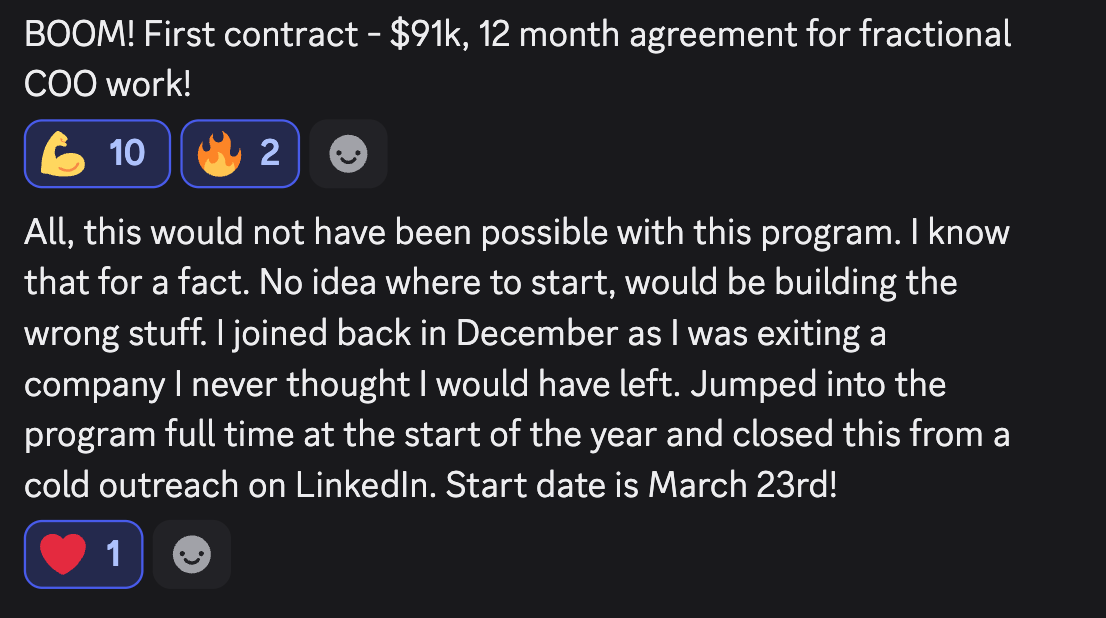
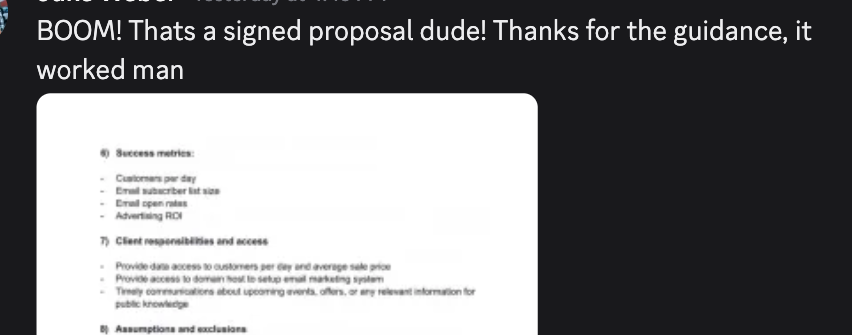
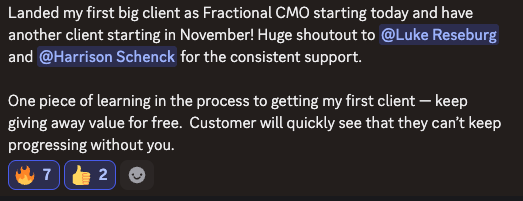
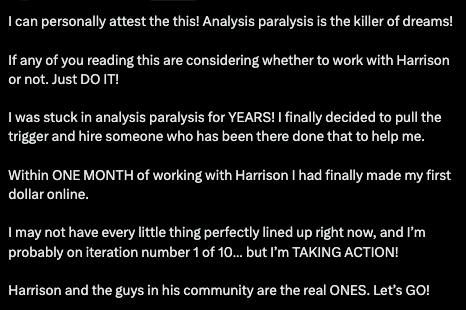
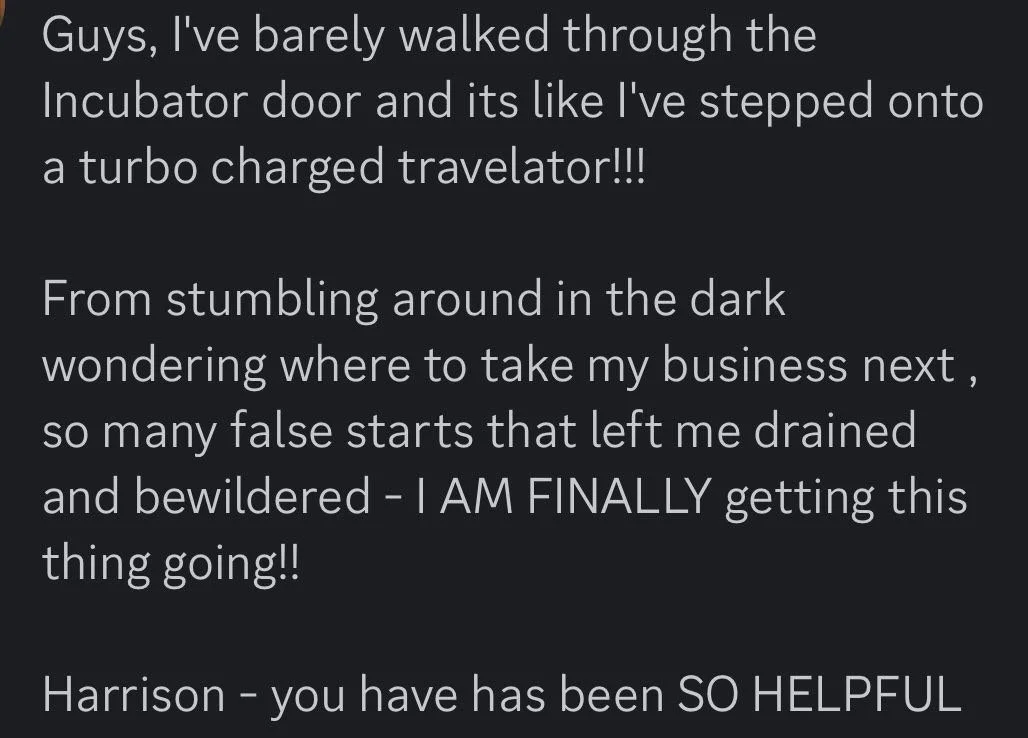
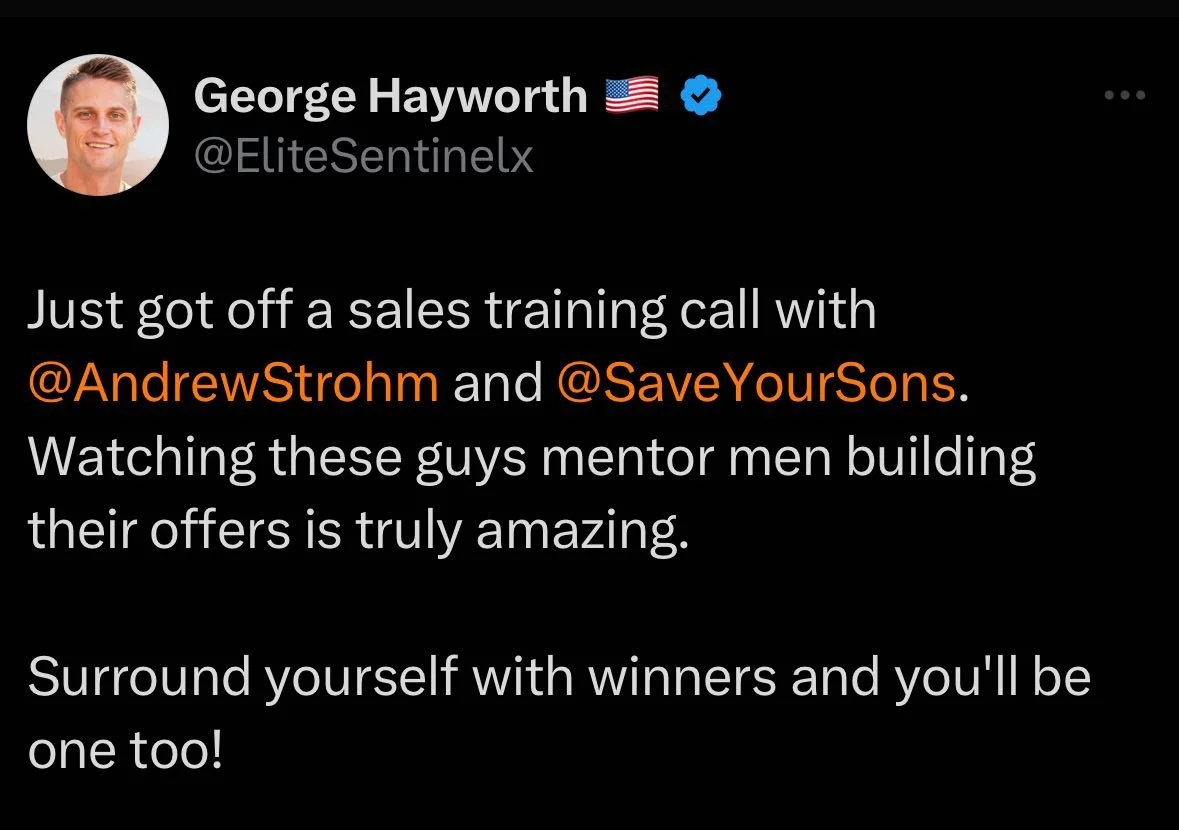
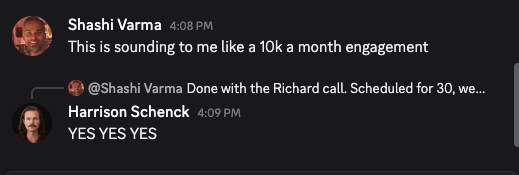
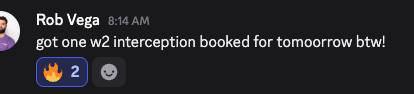
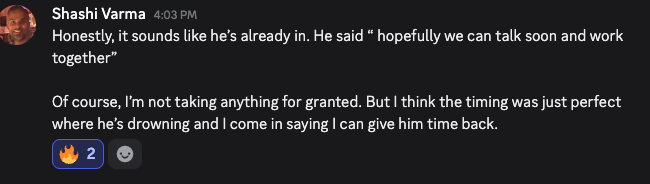
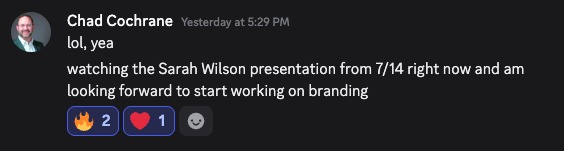
Straight from the community, in their own words
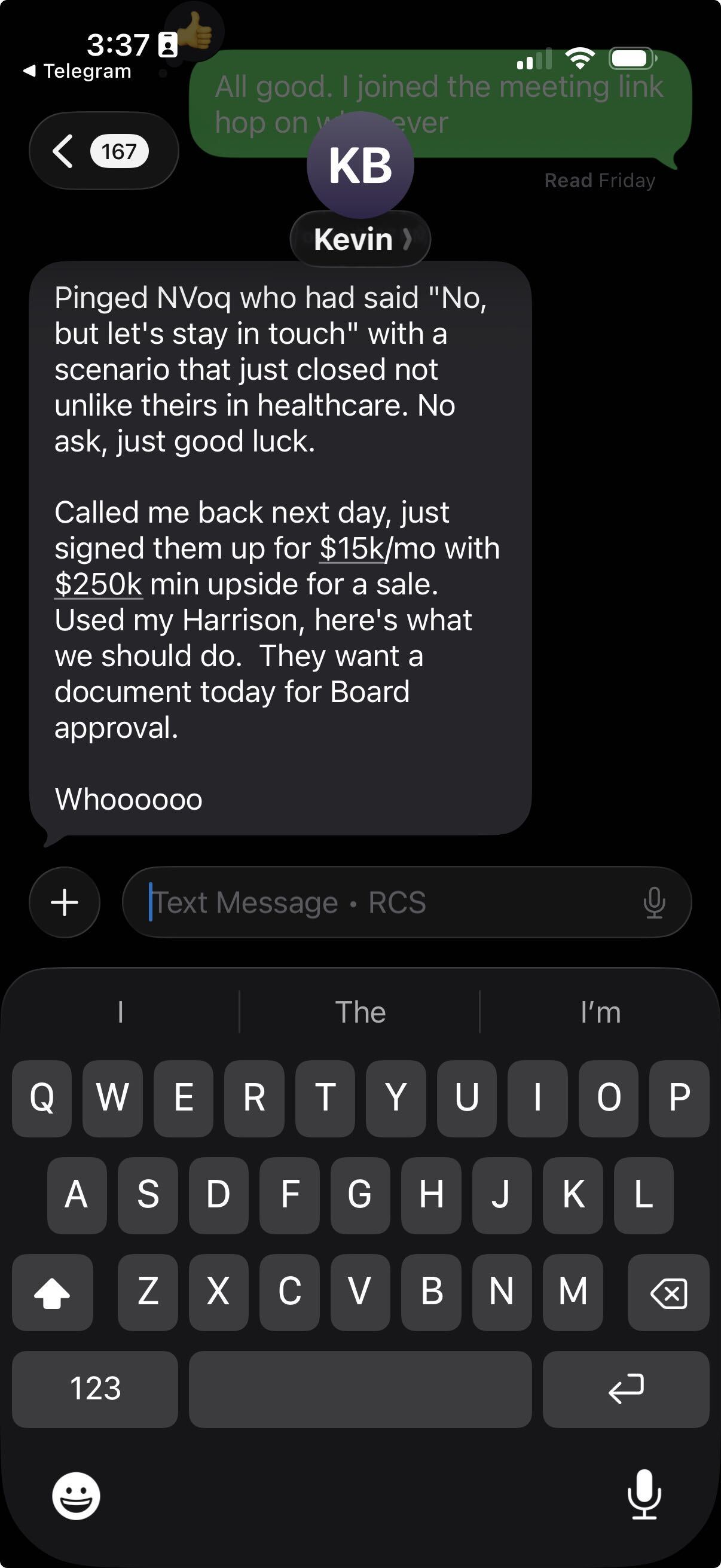
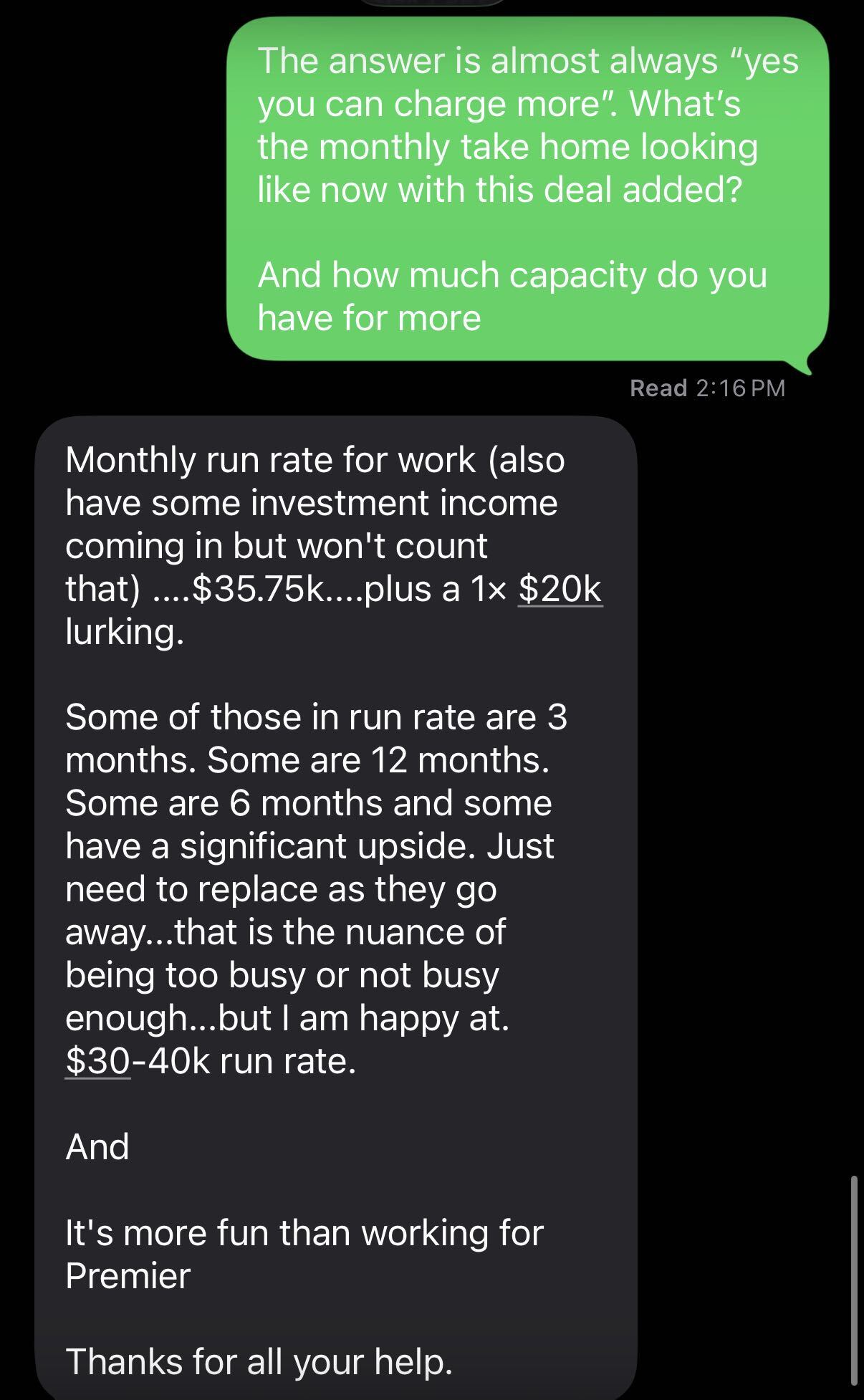
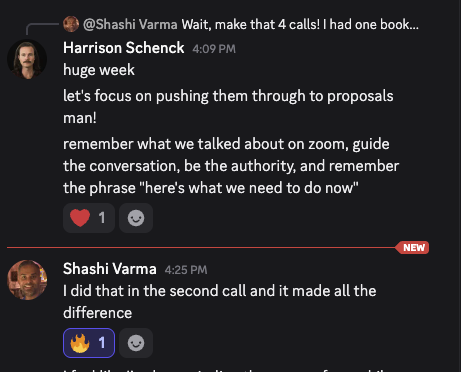
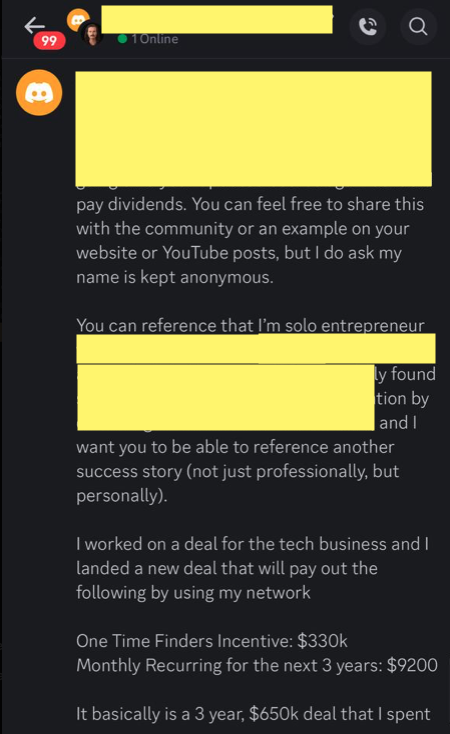
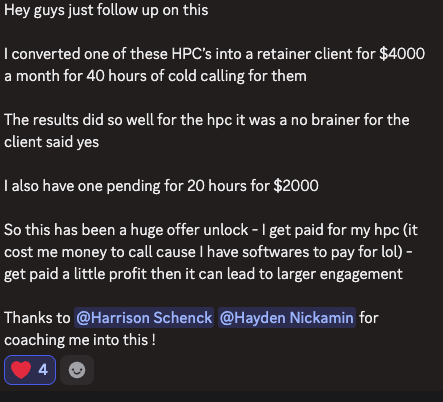
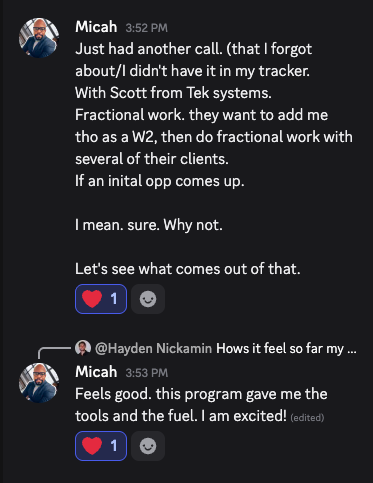
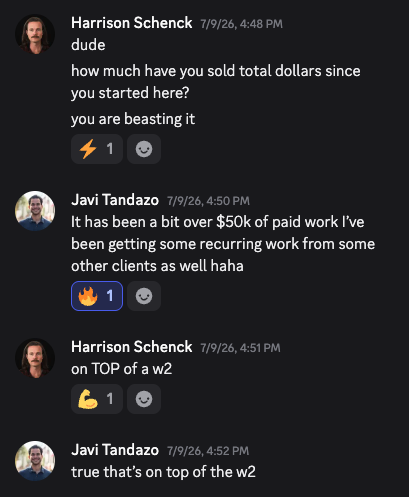
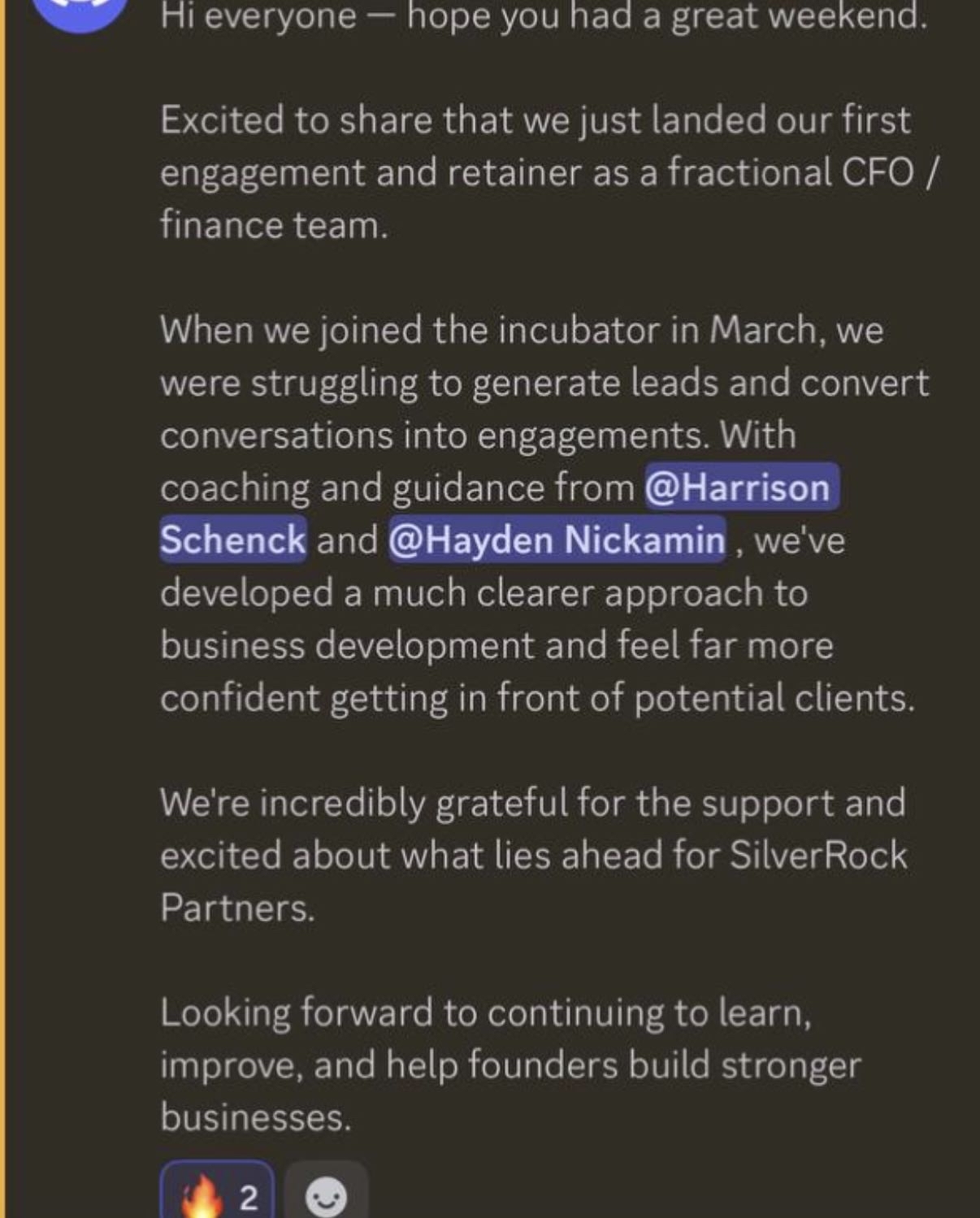
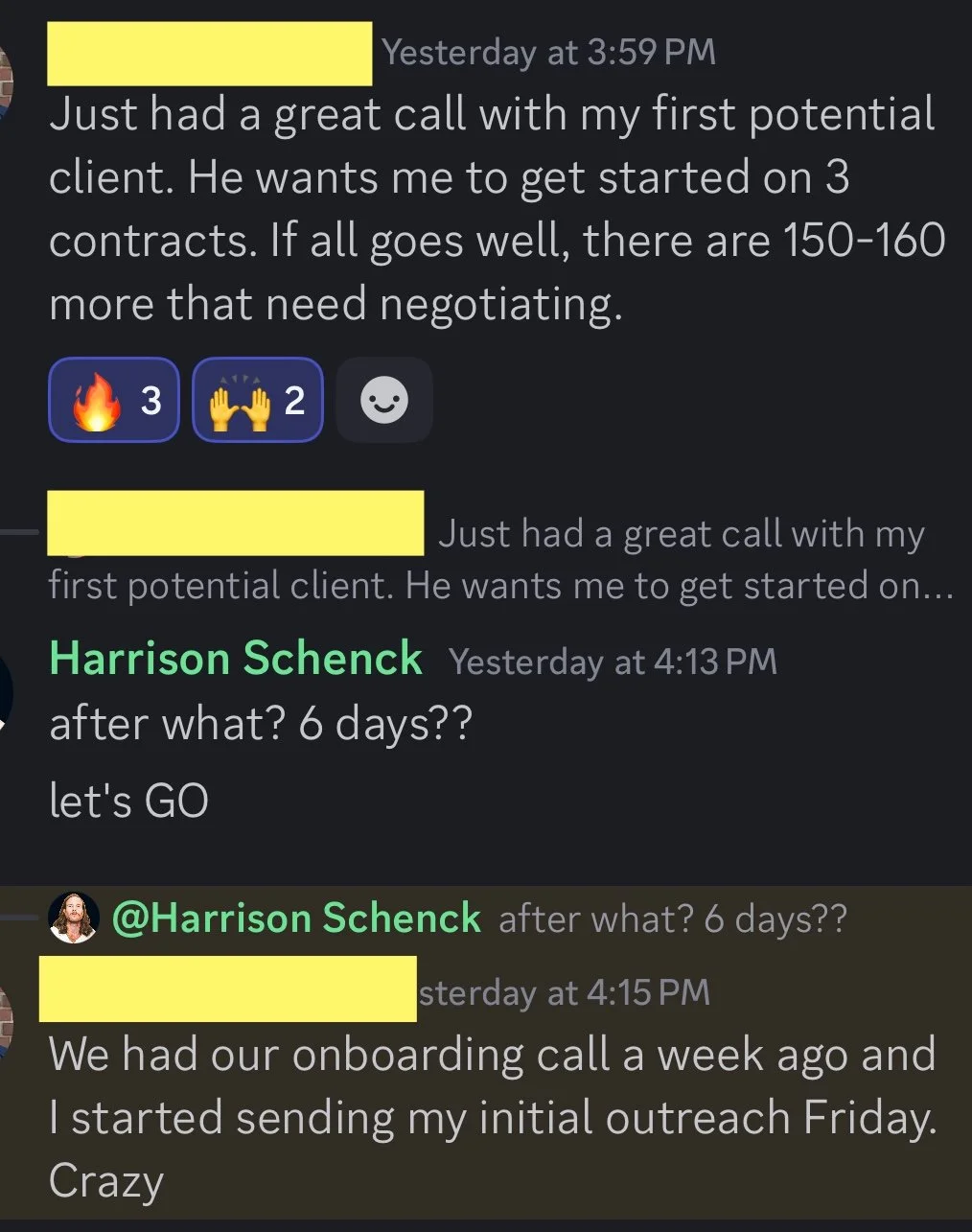
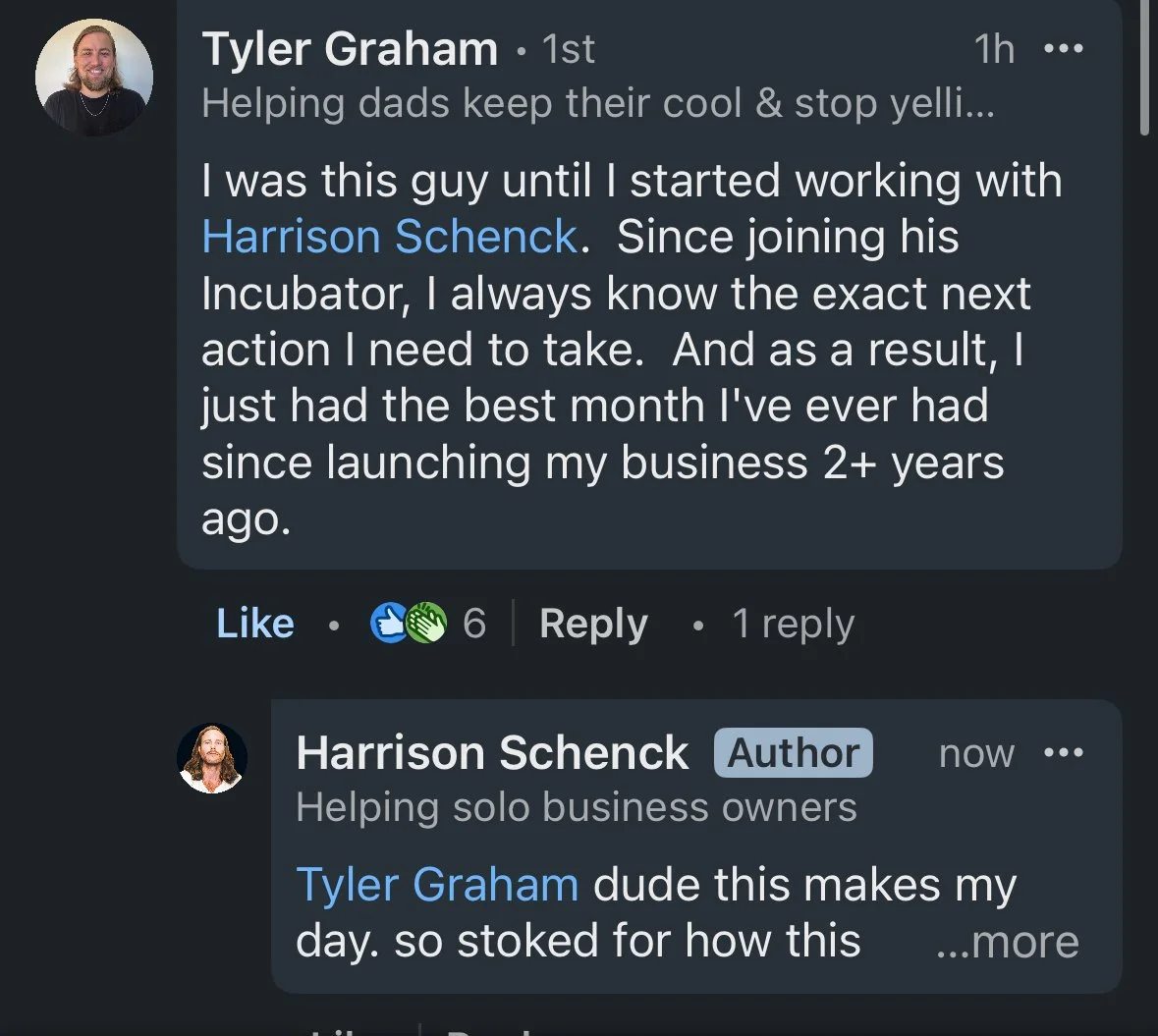
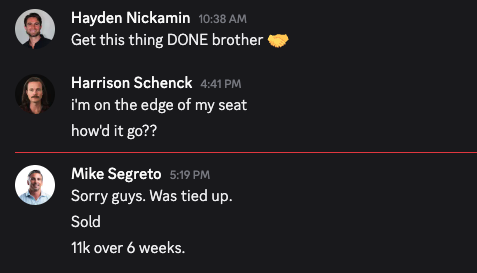
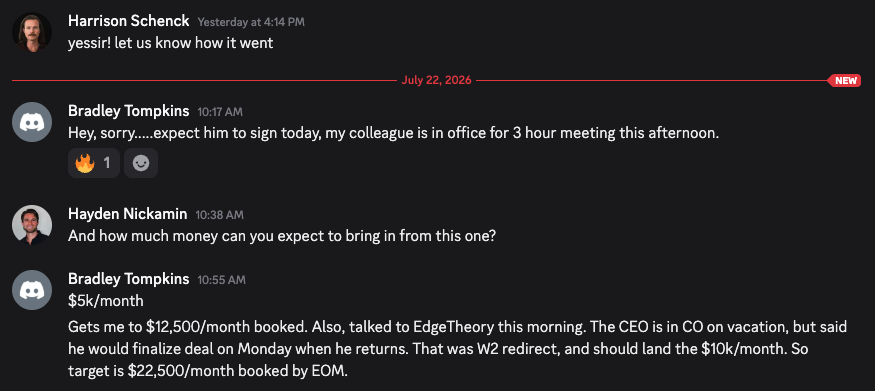
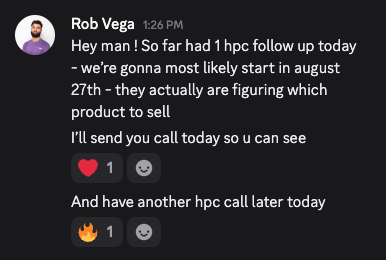
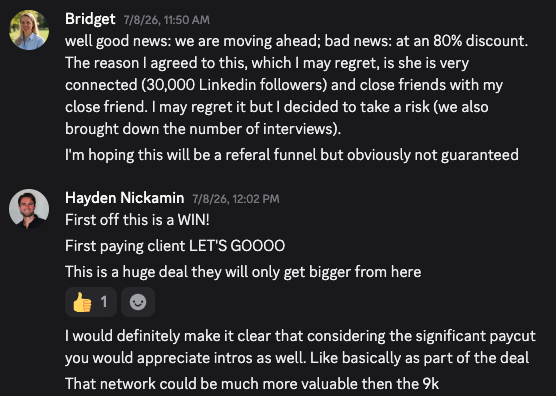
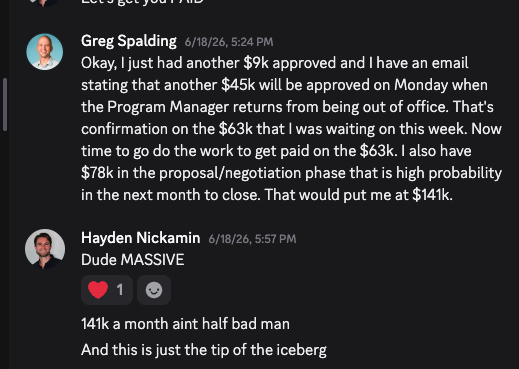
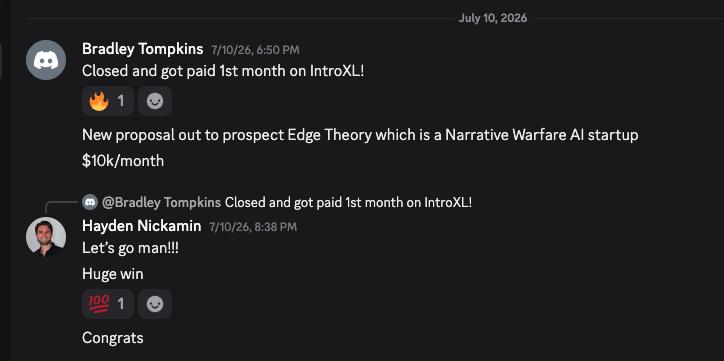
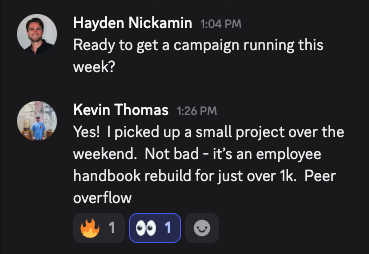
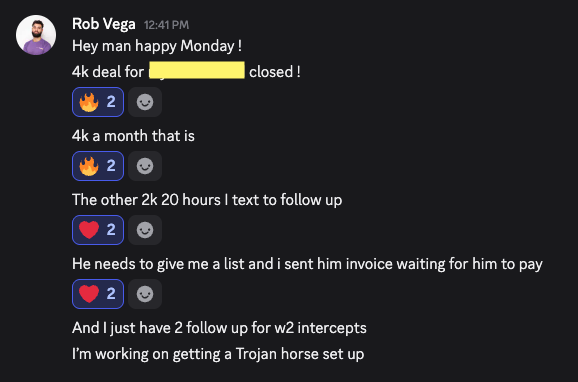

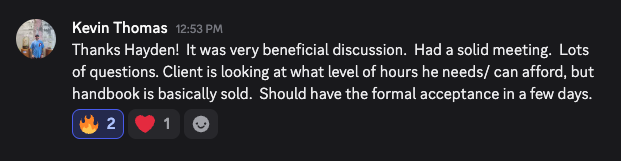


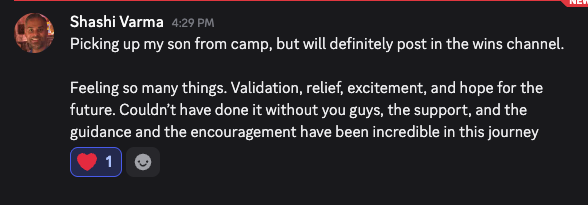
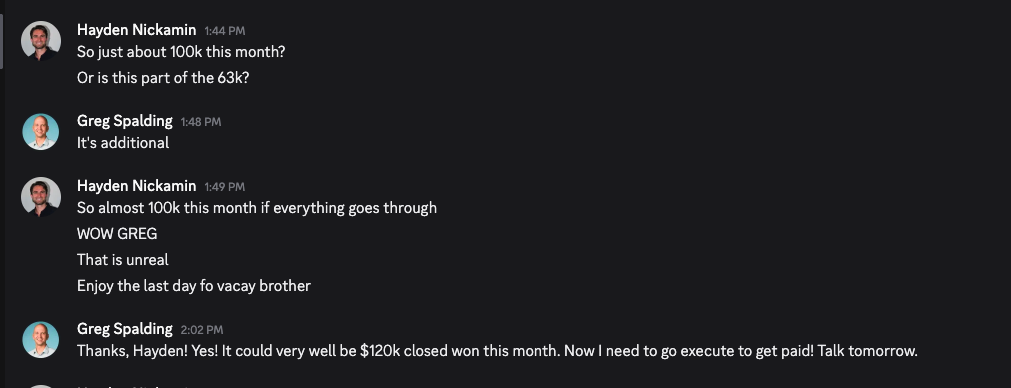
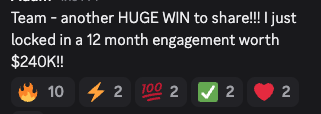
And plenty more besides
Smaller steps, early traction, and the days that kept people going.